
Are you feeling stuck, overlooked, uncertain, or unable to perform at the level you once did, both in your personal & personal life?
As you are reading this, you are probably a midlife professional wondering why your confidence & self-esteem has disappeared off!
You may be waking up in the early hours of the morning, ruminating on:
Is it normal to lose my confidence in midlife?
How can I become more resilient in midlife?
How can I rebuild my self-belief after setbacks?
How do I get my confidence back after 40 or 50?
You’ve got this. You are not alone.
Crikey. These thoughts have crossed my mind too. I’ve been there & still navigating my way through. Let’s first acknowledge & accept that there could be several causes for a loss of confidence in your 40s and 50s.
We can feel a loss of sense of ourselves, our identity, passion & purpose. You may be experiencing a loss of a relationships, connection, looking after aging/poorly parents, experiencing brain fog (hello perimenopause), invisibility at work, losing your job, a failed business venture, career setback, changing careers, scared of starting over in midlife, loss of professional identity and I could go on. All these things can bring about a sense of huge loss and knocks our confidence & self-esteem, in the process.
This might also be you?
Do you find yourself constantly questioning yourself, worrying if you are attractive enough, smart enough, successful enough? Sound familiar? Do you find yourself consumed by what others’ think of you?
If all, if not some of the above rings true for you, what can you do to help yourself and turn to your ‘inner coach’ & ‘compassionate friend’ rather than let your ‘inner critic’ wreak havoc on your self-confidence & self-esteem?

So, here are some practical confidence-building strategies
1.Power of positive affirmation
Positive affirmations (simply positive statements) are immensely powerful because they release us from negativity, fear, worry, and anxiety. They re-programme our subconscious mind and attract what we desire. When these affirmations are repeated – daily is a great option, they begin to take charge of our thoughts, slowly changing our patterns of thinking and changing our life and in turn, build that inner resolve, confidence & self-esteem.
How can we reframe any negative self-talk with positive thoughts?
Record your affirmations & listen to them. Your mind will constantly register what you are listening to, even if you are paying keen attention to it or not. Subconsciously, it will take the input and process it. So, listening to positive affirmations is extremely beneficial. By saying these positive affirmations too, you are making your mind believe them.
Or, name them on post-it notes and then pop them around the house, where you will catch a glimpse of them daily. Again, your mind will visualise them, take a photographic snapshot, taking them in and processing them.
Or, note them down in a diary or journal & reflect on them as part of your daily routine.
Whatever works for you. What will your affirmations be moving forward?
Remember “Words are your medicine”

2.Power poses – our body language
Amy Cuddy in her Ted Talk talks about the power of our body language & how it can make us feel different – hunched over with rounded shoulders versus shoulders back & hands on hips can really shape how we feel in ourselves and tap into our inner confidence. Yes, pop into the loo (at the office or at home) roll those shoulders back, hands on hips and see how this change of pose makes you feel – imagine yourself as Beyonce pose or Wonder Woman (if you relate to the 70’s & 80’s female TV character)
3.Reframing our language
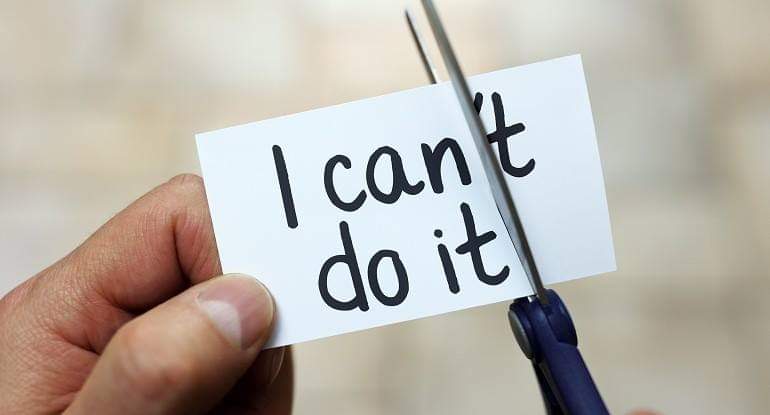
Check in on what you are saying to yourself or others. How often do we hear ourselves saying “I could do that” “I should do this” “I wish”, & “I could” How does this make us feel confidence wise? How about checking in on what you are telling yourself and switch to “I can”, “I will” “I shall” it can make such a difference, can’t it?
We often find we are bought into outdated beliefs about ourselves, way back to childhood. Throw them away (visually in your mind or literally – bin, shred, set fire too – safely first of course!) if they aren’t working for you anymore.

4.Cut down on and/or detox from social media
How about spending less time in front of a screen (and not forgetting the blue light it is emitting too) and be more present?
As human beings (not doings) we need to engage with others around us to stay happy & healthy. When we are on social media, there is a tendency for us to compare ourselves to the images on our screens, which can impact on our self-confidence. We think we see a perfect picture of others, their achievements, successes & happiness, yet rarely pick up on any sadness, disappointment, loneliness (and I could go on), that these images maybe serving to mask, what’s really going on.
So, don’t compare yourself to others – or as I like to call it ‘comparatinitis.’ Try to spend less time worrying about how you compare to people around you – family, friends, siblings. Instead, think about who you are & what makes you, YOU. By focusing on what is important to you, you can develop your own sense of value & purpose, boosting your self-confidence & esteem.

5.Self-kindness – inner coach v inner critic
You do not have to listen to your critical voice – banging on about “you’re this & you’re that” The first step is awareness, recognising when you are having those self-critical thoughts – on repeat, going around your head on a ticker tape. You can then listen to your ‘inner coach’ or ‘compassionate friend’ and get looking at those affirmations.
Alternatively, you can take pen to paper & jot down all your inner critic’s comments (or the chimp on my shoulder, in my case) on one side of a piece of paper. Then, you can reframe those thoughts & write down thoughts of self-kindness on the other side. Value yourself. If a friend of yours, was talking about themselves in a critical way what would you be saying right back to them, without hesitation?
6.Rediscovering purpose, identity, and self-worth
Purpose MATTERS to us in midlife:
For us ladies in midlife, it is linked to:
- Better physical & mental health – we’re talking lower stress, reduced inflammation increased resilience & motivation
- Stronger relationships – we’re talking meaningful connections with others
- Greater fulfilment – we’re talking alignment of our values & passions leading to a more meaningful life.
We can either talk big ‘P’ Purpose – the concept that purpose must be grand or life changing, or we can choose the small ‘p’ purpose – small moments of joy and meaning all add up. Think everyday sources of fulfilment that bring joy and meaning without ‘pressure’. Encouraging you to focus on small, meaningful moments that help to reduce anxiety around finding purpose.
What does finding the ‘joy’ mean to you, now in midlife? Passion fuels purpose. Exploring new interests can speak joy & engagement.
- What activities make you feel most alive?
- What values do you want to prioritise in this phase of your life?
- How do you engage in pursuits that energise rather than deplete you?

So, if you have noticed that your confidence is not what it once was - perhaps doubting yourself at work, second-guessing decisions, comparing yourself to others or feeling less assured in relationships. Then I can help with therapeutic coaching. Together, we’ll explore how these feelings may have started and what continues to influence them. We’ll look at the patterns of thinking that undermine your confidence and gently challenge the self-limiting beliefs that are holding you back. Alongside this deeper understanding, I’ll help you build practical tools and strategies to strengthen assertiveness and self-trust. Here’s my video here:
If you’d like to add in the menopause angle too, we can work with the EMBERS® Menopause-Informed Psychological Care framework too, a structured approach designed to support women experiencing the emotional and psychological challenges associated with perimenopause and menopause. The EMBERS® framework integrates evidence-based psychological approaches, including Cognitive Behavioural Therapy (CBT), with insights from neuroscience and lifestyle medicine. This approach helps women understand the interaction between hormonal changes, brain health, emotional wellbeing, lifestyle factors, and life context. Through this approach, women develop practical strategies to regain a sense of control over their mind, body, and life during menopause and beyond. The EMBERS® approach was developed by Menopause CBT Clinic®. Learn more about the EMBERS® framework at Menopause CBT Clinic® You can find me here: https://www.menopausecbtclinic.co.uk/menopause-cbt-therapist - on the practitioner list.
And here’s my video too.
If you are interested in finding out more, book a free intro zoom call here:
#clarityMOT #therapeuticcoaching #MIPC #menopausetherapy #perimenopause #confidence #selfesteem